MantiSpectra's mini-sensor was recently featured on BNR. We are happy to share it on our site!
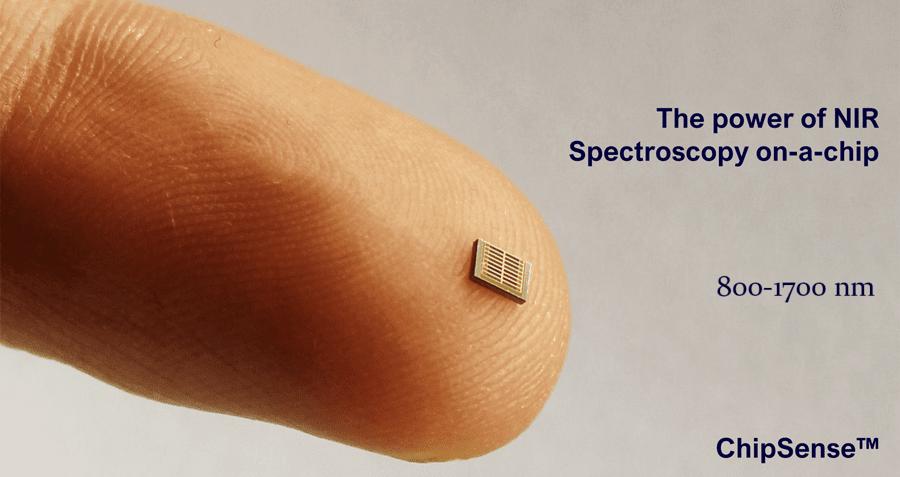
The inspiration for a new mini-sensor that fits in your phone and allows you to analyze food and materials was found in the eyes of the mantis shrimp.
In fact, this little animal's eyes can see much more than we humans can. Instead of our three photoreceptor cells that allow us to process optical light, it has sixteen. With these, the mantis shrimp can also see ultraviolet light and near-infrared light. A sensor that can do this is again very interesting for applications in industry and precision agriculture. There, they already have similar sensors, but they are often far too large and expensive. So the mission of this research team from Eindhoven University of Technology was to develop a tiny sensor that could also be made cheaply, and they succeeded.
They see opportunities for the mini-sensor in the medical sector, where it can measure, for example, the proportions in a drug, but also in agriculture, where it can start checking whether fruits and vegetables are already ripe. Eventually, it could even be incorporated into smartphones. Then we can just go home and measure whether, for example, our food in the refrigerator is still good. This would also prevent a lot of food waste.
In this audio, you'll hear researcher Kaylee Hakkel of Eindhoven University of Technology. After her PhD on this research, she will continue working on the sensor in the start-up MantiSpectra. Read more here: New mini sensor makes the invisible visible.